
"El Junco Lake"
200 article(s) found

Description of Ecuadorian Coffee Flavor with balanced acidity; introduction to the producing areas of fine coffee beans
St. Cristobal is a larger island in the Galapagos archipelago. At 410m above sea level, there is a small lake called El.Junco, which forms streams along the rocks and volcanic rocks on the southern slope of the island. Mineral-rich fresh water moistens the land of St. Cristobal, keeping the soil moist and fertile. For here.

A brief introduction to the market price of boutique coffee beans in Santa Cruz Manor
St. Cristobal is a larger island in the Galapagos archipelago. At 410m above sea level, there is a small lake called El.Junco, which forms streams along the rocks and volcanic rocks on the southern slope of the island. Mineral-rich fresh water moistens the land of St. Cristobal, keeping the soil moist and fertile. For here.

Taste characteristics of Ecuadorian Coffee Variety Flavor description introduction of grinding degree in fine coffee producing areas
St. Cristobal is a larger island in the Galapagos archipelago. At 410m above sea level, there is a small lake called El.Junco, which forms streams along the rocks and volcanic rocks on the southern slope of the island. Mineral-rich fresh water moistens the land of St. Cristobal, keeping the soil moist and fertile. For here.

A brief introduction to the treatment method of grinding degree and baking degree of fine coffee beans in Santa Cruz Manor with balanced acidity
St. Cristobal is a larger island in the Galapagos archipelago. At 410m above sea level, there is a small lake called El.Junco, which forms streams along the rocks and volcanic rocks on the southern slope of the island. Mineral-rich fresh water moistens the land of St. Cristobal, keeping the soil moist and fertile. For here.

History, culture and story allusions of holy boutique beans in Santa Cruz Manor, Ecuador
For the exchange of professional baristas, please pay attention to the coffee workshop (Wechat official account cafe_style) the history, culture, stories and allusions of St. Cristobal, a large island in the Galapagos archipelago, where there is a small lake called El.Junco, which forms several streams along the island.

The unique Santa Cruz estate boutique coffee beans grinding degree roasting degree processing method Introduction
In the mid-15th century, among fishermen fishing in the Pacific Ocean off western South America, there were legends of magical islands. It is said that the islands can sometimes be clearly seen from a distance, but disappear as the ship approaches; sometimes they look like a galleon, sometimes they take on the shape of a witch. Fishermen call these islands the enchanted islands, thinking they're

Introduction to the coffee flavor and taste of Santa Cruz Manor in Ecuador with a hint of flowers and fruits.
St. Cristobal is a larger island in the Galapagos archipelago. At 410m above sea level, there is a small lake called El.Junco, which forms streams along the rocks and volcanic rocks on the southern slope of the island. Mineral-rich fresh water moistens the land of St. Cristobal, keeping the soil moist and fertile. For here.

A brief introduction to the cultivation of fine coffee beans in Santa Cruz Manor with balanced acidity, geographical location, climate and altitude
Because of the unique role of the Galapagos Islands in the course of history, the Government of Ecuador has designated the Galapagos Islands as a national park, the land is no longer allowed to be reclaimed as new agricultural land, and the introduction and use of chemical fertilizers, pesticides, herbicides and other chemicals are strictly prohibited, so coffee produced in the Galapagos Islands is recognized as a natural product. Ecuador ES Coffee South Ecuador

Galapagos coffee producing area Galapagos coffee flavor
In 1875, ManuelJ.Cobos, an indigenous Ecuadorian, began to grow Arabic bourbon coffee trees in the Hasunda Coffee Garden (HaciendaElCafetal) in San Cristobal. Coffee production in the Galapagos Islands: coffee is grown in San Cristobal (SaintCristobal). Inner species of Hasunda Coffee Garden (HaciendaElCafetal) in San Cristobal

A brief introduction to the unique history and culture of the origin and development of coffee in the Galapagos Islands
In 1875, 340 years after Freitoma de Belanga discovered the island, a native named Kovos came to St. Cristobal, where he established the Hasunda Coffee Garden and planted about 100 hectares of Arabian bourbon coffee trees. Since the plantation is located between 140m and 275m above sea level, the climate is equivalent to that of 915m ~ 1830 m in the interior.

Coffee in the Galapagos Islands
In 1875, Manuel J. Cobos, an indigenous Ecuadorian, began growing arabic bourbon coffee trees on Hacienda El Cafetal in San Cristobal. Coffee growing in the Galapagos Islands: Coffee is grown in Saint Cristobal. Hacienda El Cafetal in San Cristobal
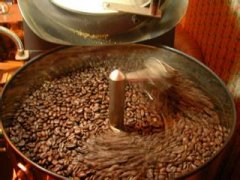
Coffee from the Galapagos Islands
In 1875, Manuel J. Cobos, an indigenous Ecuadorian, began growing arabic bourbon coffee trees on Hacienda El Cafetal in San Cristobal. Coffee growing in the Galapagos Islands: Coffee is grown in Saint Cristobal. Hacienda El Cafetal in San Cristobal

Coffee treasures, excellent quality Galapagos Islands Coffee introduction
In 1875, the Ecuadorian native Ma Covos planted about 100 hectares of Arabian bourbon coffee trees at the Hasunda Coffee Garden (Hacienda El Cafetal) in San Cristobal. The elevation of the plantation is between 140m and 275m, and the climate in this area is equivalent to that of 910m to 1830 m inland. This gradient is very suitable for super hard coffee with high acidity.
Twelve famous premium coffee producing regions of Galapagos
In 1875, Manuel J. Cobos, an indigenous Ecuadorian, began growing arabic bourbon coffee trees on Hacienda El Cafetal in San Cristobal. Coffee growing in the Galapagos Islands: Coffee is grown in Saint Cristobal. Hacienda El Cafetal in San Cristobal
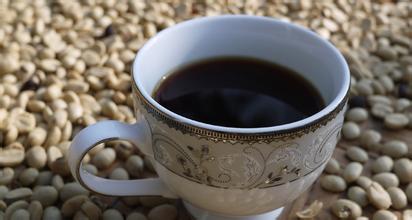
Taste rich Galapagos coffee flavor, characteristics, taste and manor introduction
In 1875, Ecuador's indigenous ManuelJ.Cobos began to grow Arabic bourbon coffee trees in the Hasunda Coffee Garden (HaciendaElCafetal) in San Cristobal. Coffee production in the Galapagos Islands: coffee is grown in San Cristobal (SaintCristobal). In the Hasunda Cafe Garden (HaciendaElCafetal) in San Cristobal
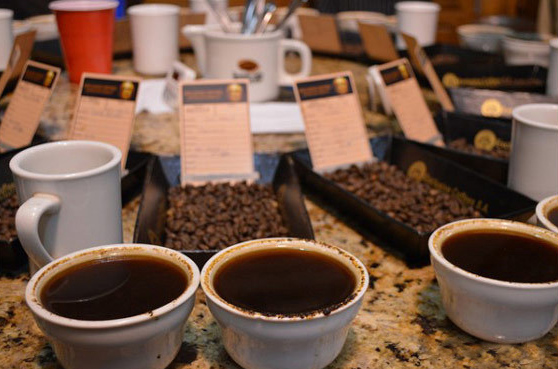
Rich taste, sour sweet Galapagos coffee flavor, characteristics, taste and estate introduction
In 1875, Manuel J. Cobos, an indigenous Ecuadorian, began growing arabic bourbon coffee trees on Hacienda El Cafetal in San Cristobal. Coffee growing in the Galapagos Islands: Coffee is grown in Saint Cristobal. Hacienda El Cafetal in San Cristobal

Coffee producing Galapagos Islands
Coffee is grown in Saint Crst ó bal. St. Cristobal is a larger island in the Galapagos Islands (Galapagos Islands) and the only one in the archipelago with plenty of fresh water.
Galapagos Islands Coffee imprint
Galapagos Islands Galapagos Islands coffee treasures from the hometown of giant turtles, this coffee treasure is of excellent quality and is grown without any chemicals.

Galapagos Islands Coffee producing area introduction Elhonko
Coffee production in the Galapagos Islands: coffee is grown in San Cristobal (SaintCristobal). Arab bourbon coffee trees are planted in the Hasunda Coffee Garden (HaciendaElCafetal) in San Cristobal. The elevation of the plantation is between 140 and 275 meters above sea level, and the climate in this area is equivalent to that between 915 and 1830 meters inland, so the gradient is suitable for high acidity.

Sour and sweet, rich taste Galapagos coffee flavor, characteristics, taste and estate introduction
In 1875, Manuel J. Cobos, an indigenous Ecuadorian, began growing arabic bourbon coffee trees on Hacienda El Cafetal in San Cristobal. Coffee growing in the Galapagos Islands: Coffee is grown in Saint Cristobal. Hacienda El Cafetal in San Cristobal